By Matthew Herz,
Director, Head of Life Insurance Products at Luma
Walk into any industry conference and you’ll hear the same fintech pitch, dressed up a hundred different ways: this tool changes everything.
New platform. New AI capability. New workflow automation. Every vendor, every carrier, every distributor is selling the next thing that’s going to completely transform the entire life insurance business.
And here’s the truth: they’re not wrong.
Individually, most of these tools really work. Agency management systems have gotten better. Illustration software is faster and more accurate. AI-driven analysis of a book of business can surface risk and opportunity that would have taken a team of analysts weeks to find manually. Underwriting has accelerated. Policy administration has modernized.
The last decade of insurance technology has delivered real, measurable progress. So why does the industry still feel like it’s working harder than ever to deliver the experience everyone wants?
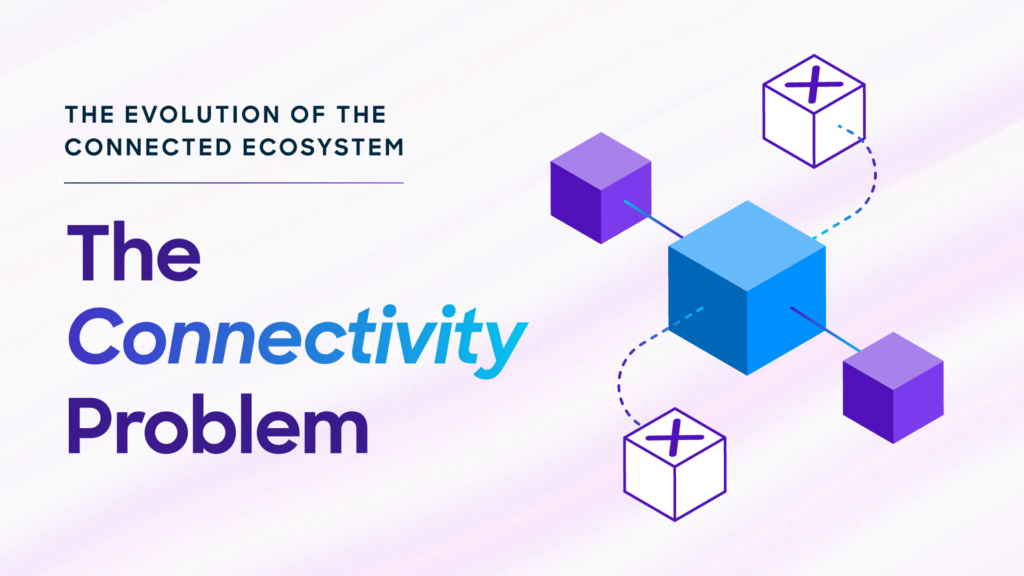
It’s because we don’t have a technology problem. We have a connectivity problem.
Everyone Is Building Well. Almost No One Is Fully Connected.
Picture a single life insurance transaction. A financial professional works with a broker-dealer, institution, or distribution firm. That firm runs its own tech stack. The institution above it runs another. The carrier evaluating the case runs a third. A reinsurer influencing product economics has its own systems entirely. Wholesalers, compliance teams, operations, service. Each one generating data, each one making decisions, each one operating with its own tools and its own partial view of the picture.
Now scale that up.
A single carrier might work with hundreds of distributors. Some share data back consistently. Some don’t. The carrier ends up with fragments of insight into each relationship, but rarely a complete, organized view of the full distribution ecosystem it depends on. Multiply that same pattern across every carrier, every distributor, every institution in the business, and you start to see the actual shape of the problem: not a lack of tools, but an industry built out of well-run islands.
More Data Hasn’t Meant More Clarity
The insurance industry has never had more information than it does right now. Every new system and every new AI workflow adds to the volume. But volume isn’t the same as clarity, and data isn’t the same as intelligence.
Most organizations aren’t short on dashboards or reporting. What they’re short on is context, the ability to answer why is this happening, what should happen next, who needs to act, and how does this decision ripple to every participant downstream. Without that connective layer, more data just means more disconnected inputs for someone to manually reconcile.
That reconciliation work, stitching together partial views across systems that were never designed to talk to each other, is where so much organizational capacity quietly disappears. It’s not that the industry lacks proficiency or effort. It’s that even highly capable organizations are spending real energy compensating for a structural gap that better connectivity would close.
AI Raises the Stakes on Connectivity. It Doesn’t Replace the Need for It
AI is going to keep accelerating underwriting, sharpening risk models, and giving advisors better tools to serve clients. That trajectory isn’t in question. But AI is only as good as the information it can see.
A model trained on one organization’s slice of the ecosystem will always be limited by that slice. The same AI applied to genuinely connected data, spanning distributor, carrier, and every participant in between, produces a fundamentally different, more valuable kind of intelligence.
In other words, connectivity doesn’t compete with AI investment. It’s what determines how much that investment returns.
Connectivity Is a Strategy, Not an IT Project
The industry is already moving in the right direction. Carriers and distributors are building APIs, integrating platforms, retiring legacy systems, and investing seriously in modernization. Those are the right moves.
But connectivity isn’t something that gets solved by a systems integration project alone. It’s a strategic choice about how an organization relates to the ecosystem around it, whether it treats its partners’ data as someone else’s problem or as part of a shared picture worth building together.
Every disconnected workflow creates friction somewhere downstream. Every fragmented view of a distribution relationship is a decision made with less information than it deserved. Every hour spent manually reconciling data between systems is an hour not spent serving the advisor, the agent, or ultimately the client at the center of it all.
What Comes Next
Insurance has never lacked innovation, talent, or capital. What it has lacked is a consistent way to connect the intelligence being generated across an increasingly complex ecosystem.
The organizations that figure this out won’t just be more efficient. They’ll be more responsive to their distribution partners, more informed in how they underwrite and price, and better positioned to serve everyone downstream. That’s the agents, advisors, distributors, carriers, and the clients all this ultimately exists to help.
The next chapter of the life business probably won’t be written by who builds the next great platform. It’ll be written by whoever finally connects the ones we’ve already built.