By Matthew Herz,
Director, Head of Life Insurance Products at Luma
The life insurance industry has never had more information. Better data, better analytics, better systems, and more ways to access all of it than at any point in its history.
So why doesn’t better information always lead to better decisions?
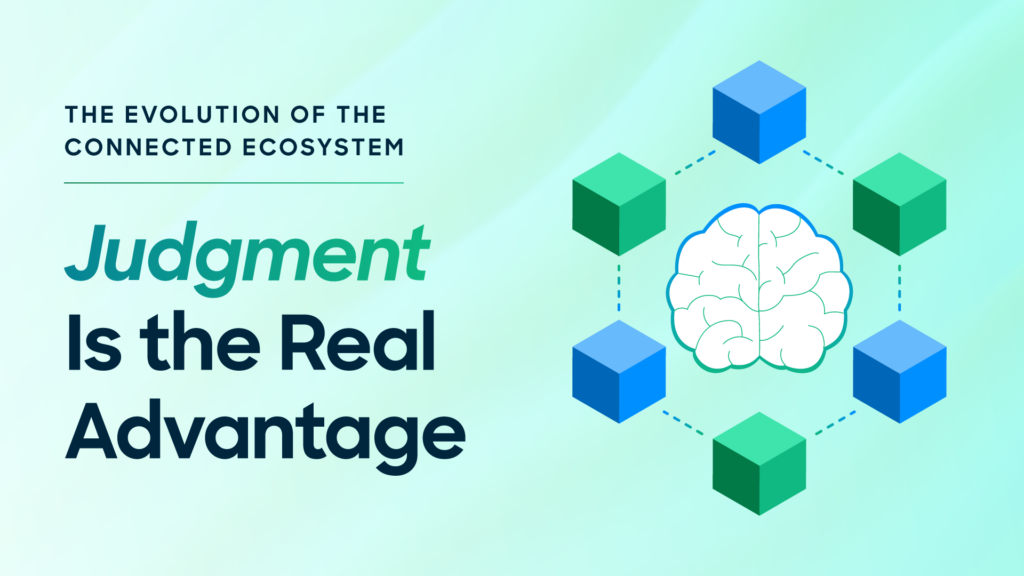
Because information and intelligence aren’t the same thing. Even good intelligence can be incomplete when it only reflects one part of the ecosystem. The real advantage begins when intelligence becomes connected.
Accurate Can Still Be Incomplete
This industry made good decisions long before APIs, cloud platforms, and predictive analytics existed. Experienced advisors understood their clients. Underwriters recognized patterns. Getting to the right answer meant knowing who to call, where to look, and which person had the experience to connect the pieces. It worked. It just required time, relationships, and often real expense.
Technology has dramatically changed the time required. Information that once took days to collect can now be available in seconds. That’s genuine progress. But getting to an answer faster doesn’t necessarily mean getting to a better one.
A CRM can accurately describe the client relationship. An underwriting system can accurately assess risk. A carrier can accurately understand its own production. Every one of those views can be completely right — and still represent only part of the picture. A manual process used to force people to stop, ask questions, and seek another perspective before acting. A modern system can produce an answer almost immediately, whether the intelligence behind it is complete. Speed doesn’t discriminate. It amplifies good intelligence exactly as readily as it amplifies an incomplete view.
Connected Intelligence Improves the Decision
This is where connectivity starts creating real economic value — not because systems are connected for the sake of being connected, but because the people using them can make better decisions.
Consider an insurance specialist supporting advisors across an institution. Answering what looks like a simple client question can mean reviewing client information, understanding the planning objective, comparing carrier solutions, checking underwriting expectations, and contacting several other people before landing on the right path. A good specialist gets there. The issue is how much effort it takes to assemble the intelligence required to arrive.
Now connect that information instead of routing it through five separate conversations — the client need, the advisor relationship, available products, carrier capabilities, and existing business, brought together in a more connected view. The specialist’s expertise doesn’t become less important. It becomes more valuable, because less of it gets spent assembling the picture and more of it gets spent interpreting it. Technology gives people information. Connected intelligence gives them context. And context is what improves judgment.
Decision Quality Creates Decision Velocity
Speed matters. Clients expect it, markets move faster, and opportunities don’t wait the way they used to. But speed by itself isn’t the advantage. A fast decision made on incomplete intelligence is just a faster mistake.
The real advantage is making a well-informed decision quickly and with confidence. Connected intelligence improves decision quality. Decision quality builds confidence. Confidence is what creates velocity — an advisor reaching a recommendation sooner, or a carrier spotting a shift in demand early enough to respond to it instead of confirming it three months later in a report. The decisions look different at every level of the ecosystem. The advantage underneath them is the same: better context, greater confidence, faster action.
Better Decisions Create Leverage, Not Headcount
There’s a cost to how this industry has historically connected intelligence. Largely, we’ve done it with people — more wholesalers, more case managers, more specialists, and more people spending significant time finding, interpreting, and moving information between systems that don’t talk to each other. That work has always created real value, and expertise isn’t going anywhere. But the highest value of an experienced person was never moving information from one place to another. It’s knowing what that information means.
Connected intelligence creates leverage by giving people back the time they were spending on the first job so they can spend more of it on the second. An advisor spends more time advising. A wholesaler spends more time building relationships instead of chasing down answers. An institution supports more advisors without adding headcount at the same rate it’s adding volume. That’s not doing more with less. It’s doing more of what matters with what the organization already has — and across thousands of decisions a week, that compounds.
The Client Feels the Difference
Clients have access to more information than ever, and increasingly the tools to make sense of a good amount of it themselves. That doesn’t make advice less important. It raises what they expect from it. A client doesn’t just want an answer quickly. They want confidence that the recommendation reflects their circumstances, the market, and the judgment of the person giving it to them — and that requires more than information. It requires context. The more connected the ecosystem becomes, the easier it is for the people serving that client to deliver both.
What Comes Next
None of this happens by accident. Connected intelligence has to be created before anyone can act on it—systems have to connect, and the right information has to move with the right context. It’s why this shift’s happening now rather than five years ago: the infrastructure to actually connect this information at scale finally exists.
Connected intelligence isn’t valuable simply because more information becomes available. It’s valuable because better information, placed in the right context, changes the decision. Better decisions create confidence. Confidence creates velocity. Velocity creates leverage. And leverage creates better outcomes for clients, advisors, distributors, carriers, and everyone else working across the ecosystem.
But there’s another step coming quickly. What happens when technology doesn’t just surface connected intelligence, but continuously interprets it, learns from it, and helps people act on it at scale?
That’s where AI becomes far more consequential. AI alone can make an organization faster. AI built on connected intelligence has the potential to make it smarter. That distinction may define the next competitive advantage in this industry.